Bitcoin weekly close versus a deeper flush which is the better setup for the crypto bull run
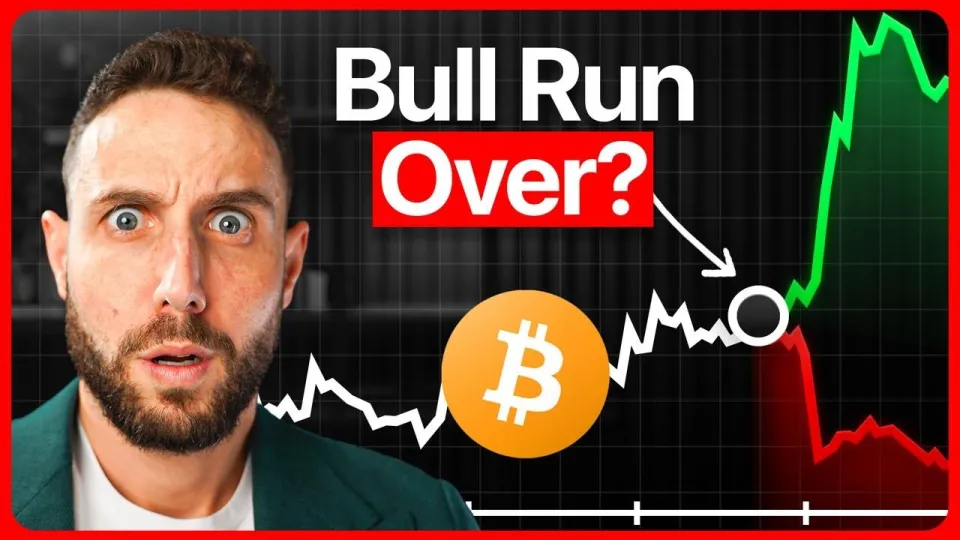
Video: Bitcoin Has 2 DAYS to Save the Crypto Bull Run
Need articles like this for your video? They help promote it on YouTube and Google — order them in the Telegram bot @sat_sit_bot. Articles with your video embedded are written and posted by the bot itself — on popular topical sites (no ads). Your first 50 articles are free.
· based on the channel EllioTrades
Bitcoin's next move hinges on where the weekly candle closes: if BTC holds its support zone into the weekly close, the crypto bull run stays intact and the current pullback becomes a buying window, while a decisive break lower shifts the plan toward the $97K area and a defensive stance on altcoins. That single close, not the intraday noise, is the variable that decides whether traders add risk or wait. The trading plan behind that view, including the levels and the coins on the watchlist, is laid out in the breakdown from Kalshi's EllioTrades page, where the channel's market calls are tracked.
Why the weekly close matters more than any single day
A weekly candle close is the cleanest filter a swing trader has, because it aggregates five days of positioning, funding flushes and weekend liquidity gaps into one number. Intraday wicks below support are common and often meaningless; a close below support is a decision made by the whole market, not by a thin order book.
The practical consequence is that the days leading into a weekly close are usually the most deceptive part of the week. Retail flow is thin, market makers step back, and moves get exaggerated in both directions. That is exactly why the setup is framed as a deadline: either buyers defend the level into the close and the bullish structure survives, or they fail and the next leg is lower.
For anyone running leverage, the sequence matters as much as the level. A wick below support that recovers before the close is a liquidity grab; a close below support with no immediate reclaim is a trend signal. Treating those two outcomes the same is how accounts get liquidated in both directions.
The Bitcoin levels that decide the bull case
The support zone is the line in the sand: holding it keeps the higher-timeframe uptrend valid, and losing it on a weekly close opens the door to a sweep of the $97K area. That $97K reference is the level to watch if support fails, because a move there would reset positioning before any durable bounce.
On the upside, a defense of support keeps a run at $100K in play, with November framed as the window in which that move could develop. The important nuance is that $100K is not a target to chase blindly, it is the confirmation that the bull structure survived the test.
A workable checklist for the next few sessions:
- Mark the support zone on the weekly chart and ignore intraday breaks until the candle closes.
- Note $97K as the downside magnet if the weekly close lands below support.
- Note $100K as the upside confirmation if support holds.
- Size positions so that a wick to either level does not force an exit.
- Re-evaluate only after the weekly candle is printed, not during the weekend chop.
Altcoins: what to buy if Bitcoin holds support
The altcoin plan is conditional, not unconditional: if Bitcoin defends support, the pullback is treated as an accumulation window in select coins rather than a reason to exit the market entirely. That is the same logic many traders describe as dollar-cost averaging into strength instead of waiting for a perfect bottom that may never arrive.
Two risks deserve equal billing. First, BTC dominance rising is the classic altcoin killer: Bitcoin can hold its level while most alts print lower lows, so a green BTC chart is not an altcoin buy signal by itself. Second, single-name conviction cuts both ways. One trader's short idea on a large-cap alt is another trader's accumulation zone, and the difference is usually risk management, not analysis.
The takeaway is to pair every altcoin entry with a Bitcoin condition. If BTC closes below support, the altcoin thesis is on hold regardless of how good the individual chart looks.
The macro catalyst most traders are ignoring
Beyond the weekly candle, a separate event sits on the calendar: MSCI's review of whether digital asset treasury companies, including MSTR, stay in global indexes, with a decision expected within days of the video's publication on 9 October 2026. Index removal would force passive funds to sell, which is a mechanical flow event rather than a sentiment one.
That matters because it can hit the market independently of Bitcoin's technicals. A weekly close above support does not protect against a forced-selling headline, and a weak close does not guarantee a crash if the index decision goes the other way. Traders holding treasury-company equity or related proxies should size for both scenarios.
Typical doubts from traders right now
Sentiment has flipped fast, and the most common objections are worth addressing directly. A single retracement turning a crowd from euphoric to bearish is itself information: it shows how leveraged the positioning was, not how broken the trend is.
A short bear market is not automatically bullish either. If the correction ends quickly, the next expansion may be weaker than the one that preceded it, because the market never fully reset. Conversely, a deeper flush that clears leverage tends to produce a stronger base, which is why some traders actively want lower prices to accumulate.
The honest answer to both camps is that the weekly close resolves the argument. Until then, the debate is opinion; after the close, it is a level.
Tools and links from the breakdown
- Trade $50 and get $50 on Kalshi
- Liquid trading with 10% off fees
- WEEX deposit promo: up to $4,000 in bonuses on a $100 deposit
- Follow the public trading journey on fomo
- EllioTrades on X
Summary
Bitcoin's weekly close is the decision point: hold support and the crypto bull run stays alive with $100K in reach for November, lose it and $97K becomes the next stop. Altcoins only work if Bitcoin works first, because rising BTC dominance can keep alts printing lower lows even on a green BTC chart. The MSCI review of treasury companies such as MSTR adds a flow-driven risk that technicals cannot price. The full trading plan, levels and watchlist come from the EllioTrades breakdown; for the market calls themselves, start at the Kalshi EllioTrades page.
Key takeaways
- Bitcoin's weekly candle close is framed as the trigger that decides whether the crypto bull run continues or the market shifts bearish.
- A break below the support zone opens a path toward the $97K area before any meaningful bounce.
- Holding support keeps a move toward $100K in play for November, with the pullback treated as a buying window.
- BTC dominance rising is the main risk for altcoins: lower lows across most alts even if Bitcoin holds.
- MSCI's decision on digital asset treasury companies such as MSTR is flagged as a separate macro catalyst.
Source: Bitcoin Has 2 DAYS to Save the Crypto Bull Run · Markdown version
Questions & answers
What happens if Bitcoin closes the week below support?
A weekly close below the support zone invalidates the bullish structure and shifts the plan toward a sweep of the $97K area. In that scenario altcoin entries are put on hold, because rising BTC dominance tends to push most alts to lower lows even when Bitcoin stabilizes.
Is a short bear market actually good for the next bull run?
Not necessarily. A quick correction that never clears leverage can leave the next expansion weaker, while a deeper flush tends to build a stronger base. That is why some traders prefer lower prices to accumulate rather than chasing confirmation higher.
Why does BTC dominance matter more than the Bitcoin price for altcoin holders?
Bitcoin can hold its support level while capital rotates into BTC and out of altcoins. In that case the BTC chart looks fine but most alts print lower lows, so an altcoin position needs a Bitcoin condition attached to it, not just a good individual chart.
What is the MSCI decision and why does it matter for crypto?
MSCI is reviewing whether digital asset treasury companies such as MSTR remain in global indexes, with a decision expected shortly after the video's 9 October 2026 publication. Removal would force passive funds to sell those names, creating mechanical flow pressure that is independent of Bitcoin's technical setup.